Atopic dermatitis is the most common form of eczema a chronic, inflammatory skin condition linked to an overactive immune response. It is often hereditary and tends to occur alongside other allergic conditions such as asthma and hay fever.
Call Us Today: 817 - 704 - 1567
Atopic and Contact Dermatitis
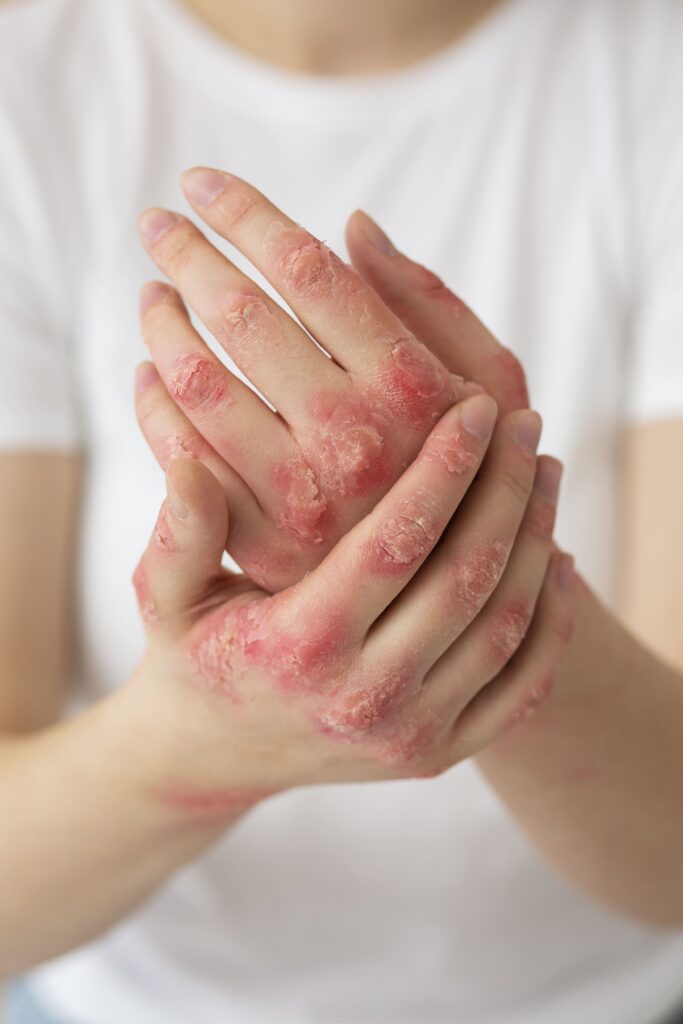
Dermatitis is a broad term for skin inflammation, and two of the most common types atopic dermatitis and contact dermatitis can cause significant discomfort, redness, and itching. At Vitology Health, we help patients identify the cause of their skin reactions and develop effective treatment and prevention strategies.
Atopic Dermatitis
Symptoms include
- Intense itching, especially at night
- Dry, scaly, or cracked skin
- Red or brownish-gray patches on the skin
- Small, fluid-filled bumps that may crust over
- Skin that is thickened or leathery from repeated scratching
Contact Dermatitis
Contact dermatitis occurs when the skin reacts to direct contact with a substance. There are two types:
- Irritant Contact Dermatitis: Caused by direct damage to the skin from chemicals, soaps, detergents, or repeated exposure to water. This is the more common type.
- Allergic Contact Dermatitis: An immune reaction triggered by allergens such as nickel (in jewelry), latex, fragrances, cosmetics, plants (like poison ivy), or preservatives in skin products.
Symptoms of Contact Dermatitis include
- Red, inflamed skin at the point of contact
- Itching, burning, or stinging
- Blisters or hives
- Dry, cracked, or scaly skin
- Swelling
Our Treatment Approach
- Detailed patient history to identify potential triggers and exposures
- Patch testing (or referral for patch testing) to identify specific allergens in allergic contact dermatitis
- Avoidance strategies helping you identify and eliminate contact with triggers
- Topical corticosteroids to reduce inflammation and itching during flares
- Barrier creams and moisturizers to protect and restore the skin
- Oral antihistamines for itch relief
- Antibiotics if a secondary bacterial infection develops from scratching
- Referrals to dermatologists or allergists for persistent or complex cases
Dealing With Atopic or Contact Dermatitis?
Vitology Health provides personalized care for atopic and contact dermatitis to help relieve irritation, reduce flare ups, and support healthier skin.