
When an illness or injury happens unexpectedly, one of the first questions many families ask is, “Where should I go?” Making the right decision can save valuable time, reduce unnecessary expenses, and ensure you receive the level of medical care your condition requires.
Some health concerns need immediate emergency treatment, while others can be safely evaluated by an urgent care provider. Understanding the difference helps you avoid delays in treatment and gives you confidence when making healthcare decisions for yourself or your family.
If you’ve ever wondered when to go to urgent care vs ER, you’re not alone. It’s one of the most common questions patients have, especially when symptoms appear suddenly or outside of normal office hours.
In this guide, we’ll explain which conditions are appropriate for urgent care, when emergency medical attention is necessary, and how choosing the right level of care can benefit both your health and your wallet.
At Vitology Health, our goal is to provide timely, patient-centered medical care for non-life-threatening illnesses while helping patients understand when emergency care is the safest option.
Understanding the Difference Between Urgent Care and the Emergency Room
Urgent care centers and emergency rooms both provide medical treatment, but they serve very different purposes.
Urgent care is designed for illnesses and injuries that require prompt attention but are not considered life-threatening. These facilities bridge the gap between your primary care physician and the emergency department, offering same-day evaluation for conditions that shouldn’t wait several days for an appointment.
Emergency rooms, on the other hand, are equipped to manage severe, life-threatening medical emergencies that require immediate intervention, advanced imaging, surgery, or hospital admission.
Choosing the appropriate facility helps ensure patients receive timely treatment while allowing emergency departments to prioritize the most critical cases.
At Vitology Health, our Urgent Care & Sick Visits service is designed to help patients receive prompt care for many common illnesses and minor injuries without the need for an emergency room visit.
What Can Urgent Care Treat?
Many conditions that feel urgent can be safely evaluated and treated in an urgent care setting.
Understanding what can urgent care treat helps patients avoid unnecessary emergency room visits while still receiving appropriate medical care.
Urgent care commonly treats conditions such as:
- Cold and flu symptoms.
- Fever.
- Ear infections.
- Sore throat.
- Sinus infections.
- Mild asthma flare-ups.
- Minor cuts requiring stitches.
- Sprains and strains.
- Minor burns.
- Skin rashes.
- Urinary tract infections.
- Mild dehydration.
- Nausea, vomiting, or diarrhea that isn’t severe.
Depending on the patient’s condition, providers may perform physical examinations, diagnostic testing, prescribe medications, or recommend follow-up care.
Many common illnesses, including Gastroenteritis, can often be evaluated during an urgent care visit when symptoms remain mild to moderate.
When Should You Go to the Emergency Room?
Knowing when to go to the emergency room can be life-saving.
Emergency departments are equipped to manage serious conditions that require immediate intervention or advanced hospital resources.
Seek emergency medical care immediately if you or a loved one experiences:
- Chest pain or pressure.
- Difficulty breathing.
- Signs of stroke, such as sudden weakness, facial drooping, or difficulty speaking.
- Severe head injuries.
- Uncontrolled bleeding.
- Loss of consciousness.
- Seizures.
- Serious burns.
- Major fractures.
- Severe allergic reactions involving difficulty breathing or swelling of the throat.
These conditions require emergency evaluation and should never be delayed by visiting urgent care first.
If you believe someone is experiencing a life-threatening emergency, call 911 immediately.
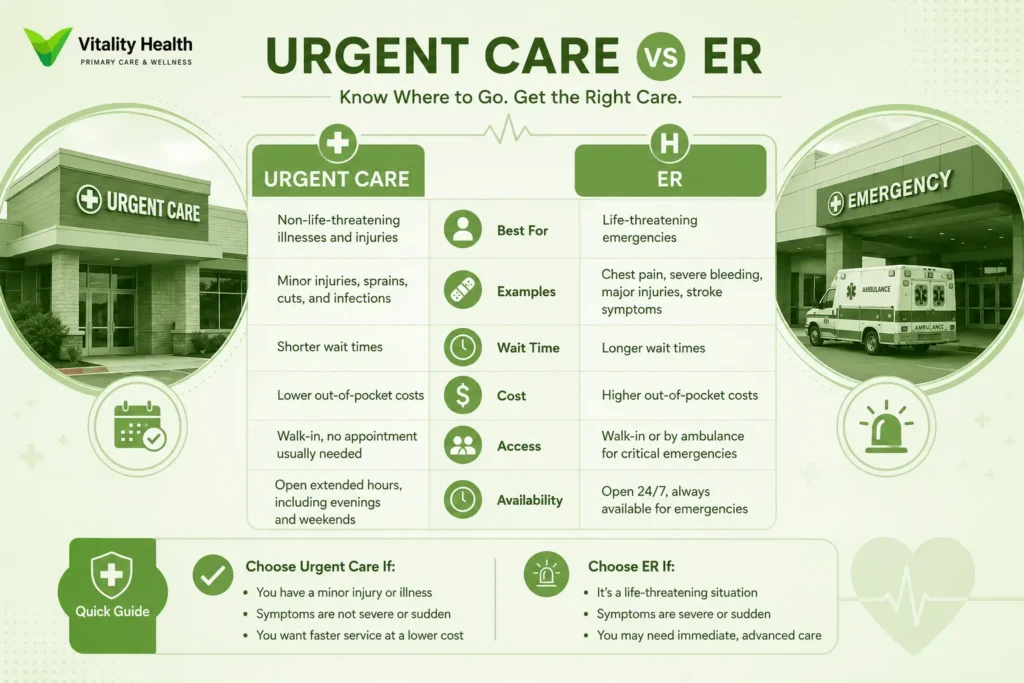
Urgent Care vs Emergency Room Cost
Another factor many families consider is urgent care vs emergency room cost.
Although healthcare decisions should always prioritize safety, choosing the appropriate level of care can often reduce unnecessary medical expenses.
For non-life-threatening conditions, urgent care visits are generally much less expensive than emergency room visits because they involve fewer hospital resources.
Emergency departments are staffed and equipped to treat critically ill patients at all hours, which contributes to higher operating costs regardless of the severity of your condition.
While costs vary depending on insurance coverage and the services provided, using urgent care appropriately often results in lower out-of-pocket expenses and shorter wait times for minor illnesses and injuries.
If you’re uncertain whether your symptoms require emergency treatment, calling your healthcare provider can often help guide your decision.
Common Symptoms That Can Usually Wait for Urgent Care
Many illnesses feel uncomfortable but don’t necessarily require emergency treatment.
Examples include persistent sore throats, ear pain, mild fevers, coughs lasting several days, painful urination, uncomplicated skin infections, and minor allergic reactions without breathing difficulty.
Likewise, patients experiencing seasonal allergies or mild asthma symptoms may benefit from evaluation before their condition worsens.
Individuals managing chronic respiratory conditions can also learn more about our Allergy & Asthma Care, which provides ongoing management beyond urgent visits.
Recognizing which symptoms are appropriate for urgent care helps patients receive timely treatment while preserving emergency services for life-threatening situations.
Urgent Care vs ER at a Glance
When you’re trying to make a quick decision, comparing the two options side by side can be helpful.
Urgent Care | Emergency Room |
Minor illnesses and injuries | Life-threatening emergencies |
Same-day treatment for non-emergencies | Immediate treatment for critical conditions |
Lower average cost | Higher average cost due to hospital resources |
Shorter wait times for many conditions | Priority based on severity of illness |
No appointment needed for many visits | Open 24/7 for medical emergencies |
Although this comparison provides general guidance, every situation is unique. When symptoms are severe or you’re unsure whether a condition is life-threatening, it’s always safer to seek emergency medical attention.
Take charge of your health with a yearly wellness visit focused on prevention,
early detection, and personalized care for a healthier future.
Ready to Schedule Your Appointment?
The Importance of Acting Early
One mistake many people make is waiting too long before seeking care.
Minor illnesses that receive prompt treatment often resolve more quickly and may reduce the risk of complications. A simple sore throat, urinary tract infection, skin infection, or respiratory illness can become more difficult to treat if symptoms are ignored for several days.
Seeking evaluation early also provides reassurance. Even when a condition turns out to be minor, knowing what’s causing your symptoms helps you recover with greater confidence.
For many non-emergency concerns, scheduling a same day sick visit Colleyville TX patients can rely on allows treatment to begin before symptoms interfere with work, school, or family responsibilities.
Urgent Care Is Part of Your Overall Healthcare
Urgent care is designed to address unexpected illnesses and minor injuries, but it works best as part of a broader healthcare plan rather than replacing your primary care provider.
After treating an acute illness, your provider may recommend follow-up care, additional testing, or ongoing monitoring if symptoms continue or if an underlying condition is discovered. This continuity helps ensure that your health concerns are fully addressed rather than simply treating the immediate symptoms.
At Vitology Health, our urgent care services are supported by a comprehensive range of medical services, making it easier for patients to receive both immediate treatment and long-term preventive care under one roof.
For example, if an urgent visit reveals elevated blood pressure, abnormal blood sugar levels, or another chronic health concern, your provider can recommend continued care through our primary care services and appropriate chronic disease management programs.
When a Walk-In Clinic Is the Right Choice
Many patients search online for a walk in clinic Colleyville TX because they need prompt medical attention without waiting days for an appointment.
Walk-in care is often appropriate for illnesses or injuries that require same-day evaluation but aren’t severe enough to justify an emergency room visit.
Examples include:
- Persistent cold or flu symptoms.
- Ear infections.
- Sinus infections.
- Minor skin infections or rashes.
- Mild allergic reactions.
- Urinary tract infections.
- Minor cuts or sprains.
The convenience of walk-in care allows patients to receive timely treatment, helping prevent minor illnesses from becoming more serious.
When appropriate, providers may also order diagnostic testing through our Lab Services to help confirm a diagnosis and guide treatment.
Chronic Conditions Sometimes Need Same-Day Evaluation
Living with a chronic medical condition doesn’t mean every symptom requires an emergency room visit, but it does mean paying close attention when your condition changes.
For example, someone with diabetes who develops persistent vomiting, unusually high blood sugar readings, or signs of dehydration should seek prompt medical evaluation. Likewise, patients with hypertension who notice significantly elevated blood pressure accompanied by severe symptoms should not ignore these changes.
Individuals managing chronic health conditions may benefit from ongoing care through our specialized programs for Diabetes, High Blood Pressure, High Cholesterol,Arthritis, and Thyroid Disorders.
Routine management helps reduce the likelihood of urgent complications while supporting better long-term health.
What Happens After an Urgent Care Visit?
Receiving treatment is often only the first step toward recovery.
Depending on your diagnosis, your provider may recommend follow-up appointments, additional laboratory testing, medication adjustments, or referrals for further evaluation.
Following these recommendations helps ensure that your condition continues improving and reduces the risk of recurrence or complications.
For many patients, an urgent visit also serves as an opportunity to reconnect with preventive healthcare. If you’ve fallen behind on routine checkups, your provider may encourage scheduling an Annual Wellness Visit after you’ve recovered.
Preventive care allows your healthcare team to identify risk factors early and support your long-term health beyond the immediate illness.
Choosing the Right Healthcare Provider Matters
Whether you need treatment for a sudden illness or ongoing preventive care, selecting a trusted healthcare provider makes a significant difference.
A practice that offers both urgent care and comprehensive primary care provides greater continuity, making it easier to coordinate follow-up care and maintain a complete understanding of your medical history.
At Vitology Health, our experienced medical specialists work together to provide patient-centered care focused on timely diagnosis, preventive medicine, and personalized treatment plans.
Instead of treating each visit as an isolated event, we strive to build long-term relationships that support your health through every stage of life.
Know Where to Go Before You Need Care
Making healthcare decisions is much easier when you understand your options before an illness or injury occurs.
Knowing when to go to urgent care vs ER allows you to respond confidently, receive appropriate treatment, and avoid unnecessary delays. While urgent care is ideal for many non-life-threatening illnesses and injuries, emergency rooms remain the safest choice for severe or life-threatening conditions that require immediate medical intervention.
Planning ahead can also save valuable time during stressful situations. Knowing where your nearest urgent care clinic is located, understanding your insurance coverage, and establishing a relationship with a trusted healthcare provider all contribute to better healthcare experiences when unexpected medical needs arise.
Get the Right Care at the Right Time
Understanding when to go to urgent care vs ER empowers you to make informed decisions for yourself and your family. Whether you’re dealing with a fever, minor injury, skin rash, urinary tract infection, or another non-emergency illness, seeking prompt medical attention can help you recover more quickly while avoiding unnecessary emergency room visits.
At the same time, recognizing the warning signs of a true medical emergency ensures that life-threatening conditions receive immediate care when every minute matters.
At Vitology Health, we’re committed to providing compassionate, timely healthcare for patients throughout Colleyville and the surrounding communities. From same day sick visit Colleyville TX services to preventive care and chronic disease management, our team is here to help you receive the right care at the right time.
If you need prompt medical attention for a non-life-threatening illness or injury, or you’re looking for an urgent care near me Colleyville TX, contact us today to learn more about our services or plan your next visit.
Frequently Asked Questions (FAQs)
1. When should I go to urgent care instead of the emergency room?
Urgent care is appropriate for non-life-threatening conditions such as ear infections, sore throats, minor cuts, sprains, urinary tract infections, mild asthma symptoms, and flu-like illnesses. Severe chest pain, difficulty breathing, stroke symptoms, uncontrolled bleeding, or major injuries require emergency room care.
2. What can urgent care treat?
What can urgent care treat? Providers commonly evaluate fevers, colds, flu, sinus infections, minor burns, skin rashes, allergic reactions without breathing difficulty, gastrointestinal illnesses, and many other acute but non-emergency conditions.
3. Is urgent care less expensive than the emergency room?
In many cases, yes. For non-life-threatening illnesses and injuries, urgent care visits generally cost less than emergency room visits because they use fewer hospital resources. Actual costs depend on your insurance coverage and the services provided.
4. Can I walk into urgent care without an appointment?
Many urgent care clinics accept walk-in patients, making them a convenient option when you need same-day medical attention for a non-emergency illness or injury.
5. Should I go to urgent care for flu symptoms?
If your symptoms are mild to moderate, urgent care is often an appropriate choice. However, if flu symptoms include severe difficulty breathing, confusion, chest pain, or signs of dehydration that cannot be managed safely, emergency medical care may be necessary.
6. Should I follow up with my primary care provider after an urgent care visit?
Yes. Follow-up appointments are often recommended if symptoms continue, medications need adjustment, additional testing is required, or an underlying chronic condition is identified during your urgent visit.
7. Can urgent care help manage chronic conditions?
Urgent care can evaluate sudden flare-ups or symptoms related to chronic illnesses, but long-term management should be coordinated with your primary care provider through regular follow-up appointments and preventive care.
8. Why choose Vitology Health for urgent care in Colleyville?
At Vitology Health, we provide timely evaluation for many non-life-threatening illnesses while also offering preventive care, chronic disease management, and coordinated follow-up through our comprehensive healthcare services. Learn more by visiting our blog or explore our full range of medical services.
Take charge of your health with a yearly wellness visit focused on prevention,
early detection, and personalized care for a healthier future.
Ready to Schedule Your Appointment?