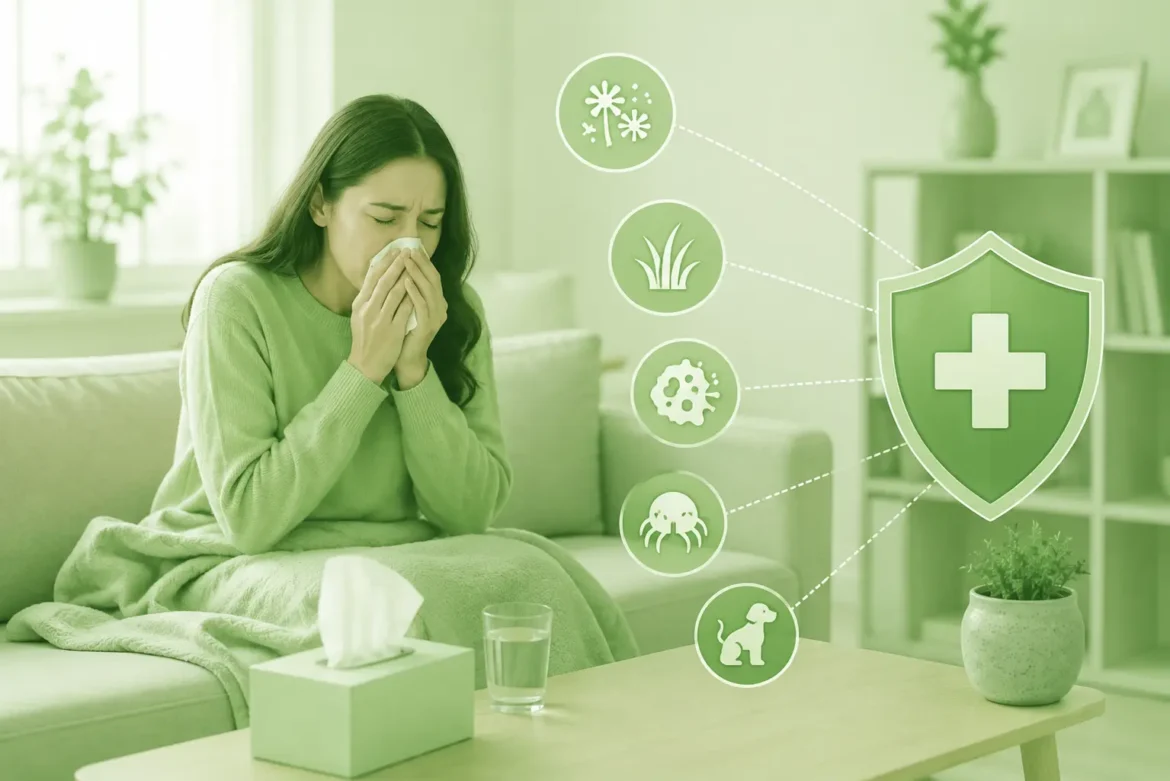
Every summer, thousands of North Texans find themselves battling constant sneezing, itchy eyes, congestion, and fatigue. Many people assume spring is the only allergy season, but in reality, summer can be just as challenging especially across Texas, where high temperatures, changing weather patterns, and abundant vegetation create the perfect environment for allergens.
If you’ve been searching for how to manage summer allergies, you’re not alone. Seasonal allergies affect millions of Americans each year, and Texas consistently ranks among the states with some of the highest pollen counts. Whether you’re dealing with persistent nasal congestion, recurring sinus pressure, or unexplained coughing, understanding what’s triggering your symptoms is the first step toward lasting relief.
At Vitology Health, our experienced primary care providers help patients identify allergy triggers, manage symptoms effectively, and develop personalized treatment plans. Rather than simply masking symptoms, we focus on long-term solutions that improve your quality of life.
Why Summer Allergies Are So Common in Texas
Unlike many northern states where pollen levels decline after spring, Texas experiences a prolonged allergy season. Warm temperatures, extended growing seasons, humidity fluctuations, and strong winds allow allergens to remain active throughout much of the summer.
Several environmental factors contribute to this:
- Long growing seasons that encourage continuous pollen production.
- Hot, dry weather that allows pollen to travel farther.
- Frequent thunderstorms that break pollen into smaller particles capable of penetrating deeper into the lungs.
- High humidity after rain promoting mold growth.
- Air pollution that can worsen allergic inflammation.
As a result, many residents in Colleyville and the surrounding Dallas-Fort Worth area experience symptoms well into late summer.
Common Texas Summer Allergens
Understanding your triggers makes allergy management significantly easier. Some of the common Texas summer allergens include:
1. Grass Pollen
Grass pollen is one of the biggest contributors to summer allergies across North Texas.
Common grasses include:
- Bermuda Grass
- Johnson Grass
- Timothy Grass
- Bahia Grass
- Ryegrass
Grass pollen levels typically peak from May through August, although weather conditions can extend the season.
2. Mold Spores
Mold thrives in:
- Damp soil
- Compost piles
- Fallen leaves
- Air conditioning systems
- Bathrooms
- Basements
After summer rainstorms, mold counts often increase dramatically.
3. Weed Pollens
By late summer, weeds begin producing significant amounts of pollen, preparing for fall allergy season.
Common offenders include:
- Ragweed
- Pigweed
- Sagebrush
- Lamb’s Quarter
4. Outdoor Air Pollution
While pollution isn’t technically an allergen, ozone and airborne pollutants can intensify allergic reactions and asthma symptoms.
5. Dust Mites
Although dust mites are indoor allergens, they thrive during humid Texas summers, making indoor allergy symptoms worse.
Summer Allergy Symptoms You Shouldn’t Ignore
Many people mistake allergies for repeated colds because the symptoms overlap considerably.
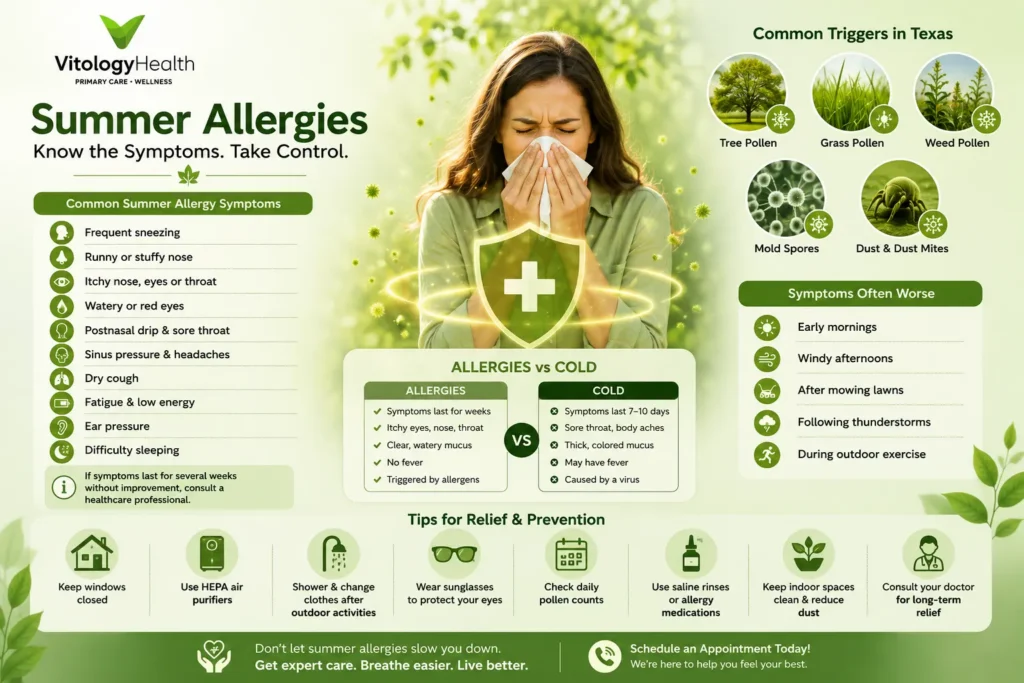
The most common summer allergy symptoms include:
- Frequent sneezing, especially after spending time outdoors or during the morning when pollen levels are highest.
- A runny nose with clear, watery mucus rather than the thick mucus commonly associated with infections.
- Persistent nasal congestion that makes breathing through your nose difficult.
- An itchy nose that often leads to repeated rubbing or sneezing.
- Itchy or scratchy throat caused by postnasal drip.
- Watery, itchy, or burning eyes that become irritated after outdoor exposure.
- Red or swollen eyes due to ongoing allergic inflammation.
- Ear pressure or a feeling of fullness caused by congestion affecting the Eustachian tubes.
- Sinus headaches or facial pressure resulting from blocked nasal passages.
- Postnasal drip that may trigger throat irritation or a lingering cough.
- A dry, persistent cough, particularly at night or after prolonged outdoor activity.
- Fatigue caused by poor sleep, ongoing inflammation, and difficulty breathing comfortably.
- Difficulty sleeping because congestion and coughing worsen when lying down.
Many people notice that these symptoms become noticeably worse under certain environmental conditions, particularly in North Texas.
Your symptoms may intensify:
- Early in the morning when grass pollen counts are at their highest.
- During windy afternoons, when allergens are carried over long distances.
- After mowing the lawn or spending time gardening.
- Following summer thunderstorms, which can break pollen into smaller particles that are easier to inhale.
- During outdoor exercise, when increased breathing allows more allergens to enter your airways.
Take charge of your health with a yearly wellness visit focused on prevention,
early detection, and personalized care for a healthier future.
Ready to Schedule Your Appointment?
Allergy vs Cold Symptoms: How Can You Tell the Difference?
Many patients ask whether they’re experiencing allergies or catching another summer cold.
Understanding allergy vs cold symptoms can help determine when it’s time to seek medical care.
Symptom | Allergies | Cold |
Sneezing | Very common | Sometimes |
Itchy eyes | Common | Rare |
Itchy nose | Common | Rare |
Fever | Never | Sometimes |
Body aches | Rare | Common |
Thick mucus | Usually clear | Often yellow or green |
Duration | Weeks or months | 7–10 days |
Triggered outdoors | Yes | No |
One major clue is itching. If your eyes, nose, or throat itch, allergies are much more likely.
Persistent symptoms lasting several weeks also point toward allergies rather than infection.
Why Proper Diagnosis Matters
Many people self-treat with over-the-counter medications for years without ever identifying the underlying cause.
An accurate diagnosis helps:
- Identify specific allergy triggers.
- Reduce unnecessary medication use.
- Prevent recurring sinus infections.
- Improve asthma control.
- Create personalized prevention strategies.
- Improve long-term quality of life.
Your family physician can often diagnose seasonal allergies based on symptoms, medical history, physical examination, and, when appropriate, recommend allergy testing.
Allergy Testing in Colleyville, TX
If symptoms continue despite medication or occur every year, professional allergy testing Colleyville TX may be recommended.
Testing may include:
Skin Prick Testing
Small amounts of common allergens are introduced just beneath the skin to identify reactions.
Blood Testing
Blood tests measure allergy-related antibodies and may be appropriate for patients who cannot undergo skin testing.
Symptom Review
Your provider evaluates:
- Seasonal timing
- Environmental exposures
- Family history
- Home conditions
- Occupational risks
Knowing exactly what you’re allergic to allows for a much more targeted treatment plan.
For patients experiencing ongoing symptoms, Vitology Health works closely with individuals to determine the most appropriate diagnostic approach and next steps.
How to Manage Summer Allergies Effectively
Learning how to manage summer allergies involves combining avoidance strategies with appropriate medical treatment.
1. Monitor Daily Pollen Levels
Before spending time outdoors, check local pollen forecasts.
On high-pollen days:
- Exercise indoors
- Limit yard work
- Keep windows closed
- Shower after returning home
2. Keep Indoor Air Clean
Indoor air quality has a major impact on allergy symptoms.
Helpful measures include:
- Replace HVAC filters regularly.
- Use HEPA air purifiers.
- Vacuum using HEPA-filter vacuums.
- Reduce indoor humidity below 50%.
- Clean mold-prone areas routinely.
3. Wash Away Pollen
Pollen sticks to:
- Hair
- Clothing
- Skin
- Shoes
- Pets
Simple habits make a big difference:
- Shower after outdoor activities.
- Change clothes immediately.
- Wash bedding weekly.
- Wipe pets after walks.
4. Stay Hydrated
Hydration helps thin mucus and reduces throat irritation caused by postnasal drainage.
5. Wear Sunglasses Outdoors
Large wraparound sunglasses help reduce pollen exposure to the eyes.
Best Medicine for Seasonal Allergies
Choosing the best medicine for seasonal allergies depends on symptom severity, medical history, and individual triggers.
Common treatment options include:
Antihistamines
These help reduce:
- Sneezing
- Itchy eyes
- Runny nose
- Itchy throat
Many newer antihistamines cause less drowsiness than older medications.
Nasal Steroid Sprays
Often considered one of the most effective treatments for moderate to severe seasonal allergies.
These reduce inflammation inside the nasal passages rather than simply masking symptoms.
Saline Nasal Rinses
Daily saline irrigation helps remove pollen and mucus while improving nasal comfort.
Eye Drops
For patients with itchy or watery eyes, allergy-specific eye drops can provide significant relief.
Prescription Medications
Patients with severe allergies or asthma may require prescription therapies tailored to their individual needs.
Because some medications can interact with existing health conditions or other prescriptions, it’s important to consult your healthcare provider before beginning long-term allergy treatment.
Lifestyle Changes That Make a Difference
Medication alone isn’t always enough.
Many patients experience substantial improvement through small daily lifestyle adjustments.
These include:
- Mowing lawns less frequently or wearing a protective mask.
- Keeping car windows closed while driving.
- Running air conditioning instead of opening windows.
- Avoiding outdoor exercise during peak pollen hours.
- Drying clothes indoors instead of on outdoor lines.
- Wearing hats to reduce pollen accumulation in hair.
These habits may seem minor individually, but together they significantly reduce allergen exposure.
The Connection Between Allergies and Asthma
Untreated allergies don’t just cause sneezing.
For many people, allergic inflammation can worsen asthma symptoms.
Watch for:
- Wheezing
- Chest tightness
- Persistent coughing
- Shortness of breath
- Exercise intolerance
Managing allergies effectively often improves asthma control and reduces flare-ups.
If you’re already living with asthma, routine follow-up with your healthcare provider is essential during peak allergy seasons.
New Trends in Allergy Care
Advances in allergy research continue to improve diagnosis and treatment. In recent years, clinicians have placed greater emphasis on personalized care, recognizing that each patient’s triggers, medical history, and response to treatment are unique. Rather than relying solely on symptom relief, healthcare providers increasingly focus on identifying specific allergens and developing long-term management strategies.
Digital tools have also become more common, allowing patients to monitor local pollen counts, track symptom patterns, and recognize environmental triggers more effectively. Air quality monitoring has gained attention as well, since elevated ozone levels and wildfire smoke can intensify allergy symptoms even when pollen counts are moderate.
Researchers are also exploring how climate change is affecting allergy seasons. Longer growing seasons, increased carbon dioxide levels, and shifts in weather patterns have been associated with longer pollen seasons and, in some regions, higher pollen production. These environmental changes reinforce the importance of proactive allergy management and regular communication with a healthcare provider, especially for individuals with persistent or worsening symptoms.
When Should You See a Doctor?
While mild allergies can often be managed at home, certain situations warrant professional evaluation.
Schedule an appointment if:
- Symptoms persist for more than two weeks.
- Over-the-counter medications provide little relief.
- Allergies interfere with sleep or work.
- You experience repeated sinus infections.
- Asthma symptoms worsen.
- You frequently develop headaches or facial pain.
- Your symptoms return every summer.
Early intervention often prevents complications and reduces the need for more intensive treatment later.
Why Choose Vitology Health for Allergy Care?
Managing allergies involves more than recommending an antihistamine. At Vitology Health, our primary care team takes a comprehensive approach by evaluating your symptoms, medical history, environmental exposures, and overall health to create a treatment plan tailored to your needs.
Patients benefit from:
- Personalized care from experienced family medicine providers.
- Evaluation of recurring seasonal allergy symptoms.
- Coordination of allergy testing when appropriate.
- Management of allergy-related asthma concerns.
- Preventive care focused on long-term wellness.
- Convenient access to comprehensive primary care services in the Colleyville community.
Whether you’re experiencing allergies for the first time or have struggled with seasonal symptoms for years, our goal is to help you breathe easier and enjoy every season with confidence.
Final Thoughts
Summer in Texas should be a time for outdoor activities, family gatherings, and enjoying longer days, not struggling with constant sneezing, congestion, or itchy eyes. By understanding the common Texas summer allergens, recognizing summer allergy symptoms, knowing the difference between allergy vs cold symptoms, and seeking timely medical guidance, you can take control of your health instead of letting allergies control your life.
If your symptoms return year after year or no longer respond to over-the-counter medications, professional evaluation can make a meaningful difference. From identifying triggers through allergy testing in Colleyville, TX to developing a personalized allergy treatment plan in Colleyville, TX, the right care can help reduce symptoms and improve your quality of life throughout the allergy season and beyond.
At Vitology Health, we’re committed to providing compassionate, evidence-based primary care that supports both immediate relief and long-term wellness. Don’t let seasonal allergies keep you from enjoying everything Texas has to offer.
Frequently Asked Questions (FAQs)
1. What are the most common summer allergens in Texas?
The most common Texas summer allergens include grass pollen (especially Bermuda and Johnson grass), mold spores, weed pollen, dust mites, and airborne pollutants. These allergens can remain active throughout the summer due to North Texas’ warm climate and extended growing season.
2. How can I tell if I have allergies or a summer cold?
One of the easiest ways to distinguish allergy vs cold symptoms is by looking for itching and fever. Allergies typically cause itchy eyes, nose, and throat without a fever, while colds often include body aches, sore throat, and sometimes a fever. Allergy symptoms can also last for weeks or even months if exposure to allergens continues.
3. What is the best medicine for seasonal allergies?
The best medicine for seasonal allergies depends on your symptoms and medical history. Treatment may include antihistamines, corticosteroid nasal sprays, saline nasal rinses, allergy eye drops, or prescription medications. A healthcare provider can recommend the safest and most effective option based on your individual needs.
4. When should I consider allergy testing in Colleyville, TX?
If you experience recurring seasonal allergies every year, your symptoms don’t improve with over-the-counter medications, or allergies interfere with your daily life, it may be time to consider allergy testing in Colleyville, TX. Identifying your specific triggers allows your provider to create a more personalized treatment plan.
5. Can seasonal allergies make asthma worse?
Yes. Allergies are one of the most common asthma triggers. Pollen, mold, and other allergens can cause airway inflammation, leading to coughing, wheezing, chest tightness, and shortness of breath. Proper allergy management often helps improve asthma control.
6. How can I reduce pollen exposure during the Texas summer?
You can reduce pollen exposure by checking daily pollen forecasts, keeping windows closed, using HEPA air filters, showering after spending time outdoors, changing clothes after outdoor activities, and avoiding yard work during peak pollen hours.
7. Do allergies go away on their own?
Seasonal allergy symptoms often improve once pollen levels decrease, but they usually return during the next allergy season if the underlying allergy remains untreated. Long-term management through avoidance strategies, medication, and medical evaluation can provide more consistent relief.
8. Where can I get allergy treatment in Colleyville, TX?
If you’re looking for personalized allergy treatment in Colleyville, TX, the experienced providers at Vitology Health offer comprehensive evaluations, symptom management, preventive care, and referrals for allergy testing when appropriate. Early diagnosis and treatment can help you manage symptoms more effectively and improve your overall quality of life.
Take charge of your health with a yearly wellness visit focused on prevention,
early detection, and personalized care for a healthier future.
Ready to Schedule Your Appointment?